
Your Website Isn’t About You
One of the most common mistakes businesses make with their website is also one of the easiest to overlook.
Brian Walsh
8/7/20264 min read

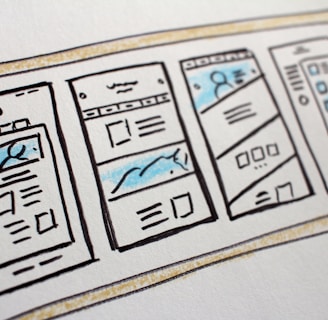
Website mistakes
One of the most common mistakes businesses make with their website is also one of the easiest to overlook.
They write it for themselves.
Spend a few minutes browsing company websites and you’ll quickly spot the pattern. The homepage proudly tells you how long the company has been in business, how many customers it serves, how experienced the team is, how many awards it has won and where it sits in the marketplace.
There is often an impressive collection of achievements, credentials and statistics.
And yet, after reading all of it, you’re often left with a simple question:
“So what?” That might sound harsh, but it’s exactly the question many visitors are silently asking.
Not because they don’t care about your experience or your awards, but because they arrived at your website for a different reason entirely.
They arrived because they have a problem to solve.
They need a service.
They are looking for a solution. They are evaluating options. They want to know whether you can help.
The reality is that most customers aren’t particularly interested in your story until they understand how your story relates to theirs.
Imagine walking into a meeting with a prospective customer. You sit down and before they’ve had an opportunity to explain their situation, you spend the next twenty minutes talking about your company, your history, your achievements and your team.
Most people would consider that a rather odd conversation. Yet that is exactly how many websites are written. The customer arrives with a need and is immediately presented with a detailed autobiography of the business.
The best salespeople don’t behave that way. The best consultants don’t behave that way. The best customer service representatives don’t behave that way.
They start by listening. They start by understanding. They start by looking at the world from the customer’s perspective.
The irony is that websites can’t literally listen, but they can be written as if they have.
Every page should be asking itself a simple question: “What does the customer need to know at this point?”
Not what the company wants to say. Not what marketing wants to promote. Not what management wants to boast about.
What does the customer actually need to know?
That shift in thinking changes everything. Suddenly, years of experience stop being a statistic and become reassurance. Awards stop being trophies and become evidence of credibility. Products stop being lists of features and become solutions to real-world problems.
Instead of saying: “We have over 25 years of experience.” You explain what that experience means for the customer. Perhaps it means fewer mistakes. Perhaps it means faster implementation. Perhaps it means you’ve solved similar problems hundreds of times before.
The experience itself isn’t the benefit. The outcome of that experience is.
The same principle applies to products and services.
Too many websites describe what they do. Far fewer explain why it matters.
Customers don’t buy cybersecurity because they enjoy cybersecurity.
They buy peace of mind.
Customers don’t buy customer journey reviews because they enjoy reviewing processes. They buy better customer experiences, higher conversion rates and fewer complaints.
Customers don’t buy cloud services because they like servers. They buy reliability, flexibility and reduced risk.
The website should constantly connect what you do with why it matters.
In many ways, a website should feel less like a brochure and more like a consultation.
Imagine you’re sitting beside the customer rather than opposite them. You’re helping them understand their options. You’re guiding them through possibilities. You’re answering the questions they haven’t yet asked. You’re helping them decide whether your solution is the right fit.
That’s a very different mindset from simply presenting information.
It is also far more effective.
This doesn’t mean removing information about your company. Customers still want to know who they’re dealing with. They still want to understand your background, your expertise and why they should trust you.
But that information should support the customer’s journey rather than interrupt it.
Even FAQs deserve scrutiny.
Many organisations seem to use FAQs as a substitute for customer engagement. The message can sometimes feel like:
“Please read all of these before contacting us.”
But customers don’t always fit neatly into predefined questions. Their circumstances are often unique. Their concerns are often nuanced.
Sometimes they simply need to talk to someone.
A website should therefore do more than provide answers. It should encourage conversations. It should invite questions. It should make it easy for customers to seek clarification and guidance.
After all, every question is a sign of interest.
Every enquiry is a potential opportunity.
Every conversation is a chance to build trust.
The UXY Insight
The most effective websites aren’t written from the company’s perspective.
They’re written from the customer’s perspective.
They recognise that visitors aren’t arriving to admire the business. They’re arriving to determine whether the business can help them.
When organisations shift their thinking from “What do we want to tell customers?” to “What do customers need to know?”, the entire customer journey improves.
The content becomes more relevant. The messaging becomes clearer. The value proposition becomes stronger.
And the website starts behaving less like a digital brochure and more like what it was always meant to be: a trusted guide helping customers make informed decisions.